
Knitted Passive Probes for inSitu Sweat Collection & Diagnosis
2018
NIH FUNDING COLLABORATION | The National Academies Keck Futures Initiative - NCBI
TEAM: University of Pennsylvania HealthTech - Shu Yang, Weerapha Panatdasirisuk, Ming Zhang and Drexel University - Genevieve Dion, Amy Stoltzfus
With the support and interest of Penn HealthTech, we developed iterative cycles between polymer engineering and electrospinning core-sheath yarns and industrial integration methods for incorporating these yarns into stable, knitted wristbands for passive sweat collection. We worked together to propose and down-select yarn composition, configurations, and knit structures for direction wicking and increasing swelling capacity, in addition to machine twisting methods to strengthen yarns, reduce manufacturing drag, and build proof-of-life for colorimetric and reversible color-changing demos.
Seamless knitted wearable probe patch using PCL cover and colorized polyamide core.

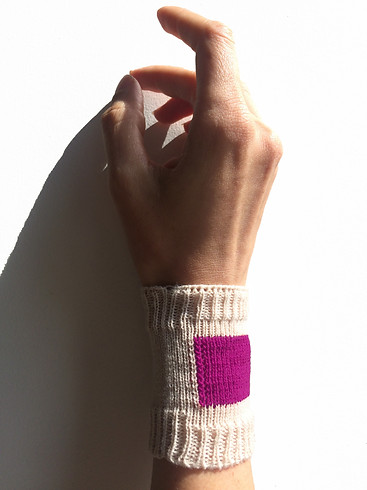

Shima Seiki KnitPaint programming language for wristband design, architectures, and color-changing island.
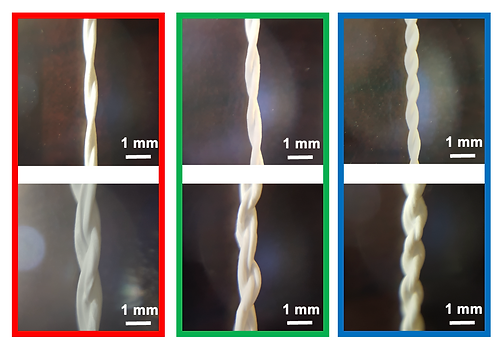


PCL ply yarns for prestrain and additional strength.

Core sheath manufacturing using electrospinning.

PCL yarn vs. commercial yarn - credit: Weerapha Panatdasirisuk


Transition line between a commercial base yarn (white) and an engineered core-sheath probe yarn (fuscia). The introduction of the core-sheath loops into previously existing base yarn loops displays some splintering or delamination of the cover material required for the color-changing effect and exposing the core (black).